
Custom Sculpture Fabrication: From Concept to Landmark
PUBLIC ART FABRICATION / LARGE-SCALE SCULPTURE MANUFACTURINGTHEMED PARKS / LANDSCAPE ART
9/4/202611 min read
Custom Sculpture Fabrication: From Concept to Landmark


A custom sculpture begins with an idea. Turning that idea into a physical object that can stand several metres tall, survive outdoors, travel across borders and be safely installed in a public space is an entirely different challenge.
Custom sculpture fabrication is the process of translating an artistic concept, sketch, maquette or 3D model into a structurally engineered, manufacturable and installation-ready sculpture.
For artists, architects, property developers, cultural institutions, entertainment operators and global brands, the right sculpture fabrication partner therefore does much more than manufacture a shape.
They must understand art, engineering, materials, structural systems, finishing, logistics and installation as one connected process.
At DEFARA, this intersection between creativity and manufacturing has shaped more than 30 years of production experience across public art, large-scale sculptures, commercial installations, branded environments and character-based artworks.
This guide explains how professional custom sculptures are actually made — and what clients should consider before beginning a large-scale sculpture project.
What Is Custom Sculpture Fabrication?
Custom sculpture fabrication is the creation of a one-off or project-specific sculpture based on an original creative concept.
Unlike a standard decorative product, a custom sculpture may need to respond to:
a particular architectural environment;
an artist's original design;
a brand or licensed character;
engineering and structural requirements;
indoor or outdoor conditions;
transportation restrictions;
public safety regulations;
lifting and installation conditions; and
a specific visual finish.
Projects can range from a sculptural centerpiece inside a hotel or shopping mall to a monumental public artwork measuring many metres in height.
Professional sculpture fabricators may work from:
sketches;
architectural drawings;
physical maquettes;
CAD files;
3D models;
character design files;
artist-approved prototypes; or
conceptual renders.
The fabricator's job is to preserve the original creative intention while determining how the sculpture can actually be built.


Who Uses Custom Sculpture Fabrication Services?
Artists and Art Studios
Artists often work with specialist fabricators when an artwork becomes too large, structurally complex or technically demanding to produce entirely within the artist's own studio.
A fabrication partner can support enlargement, digital modelling, structural development, material experimentation, mould-making and final production while maintaining the artist's visual language.
Architects and Landscape Designers
Sculpture increasingly forms part of architectural placemaking.
Custom sculptures can become:
development landmarks;
building entrance features;
plaza installations;
landscape artworks;
gateway sculptures; or
focal points within public spaces.
The fabrication process therefore needs to coordinate closely with architecture, landscape, foundations and structural engineering.
Shopping Malls and Commercial Developers
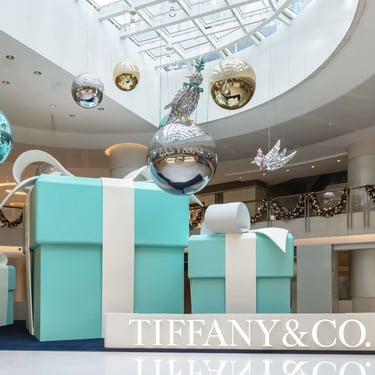
Large-scale commercial sculptures can transform atriums, façades and public circulation areas into recognisable destinations.
Typical applications include:
shopping mall atrium sculptures;
suspended art installations;
retail destination landmarks;
seasonal installations;
branded sculptures; and
interactive art features.
In these environments, sculpture is not simply decoration. It can become a tool for placemaking, photography, social engagement and visitor experience.
Hotels and Resorts
Hotels often commission custom sculptures for arrival spaces, lobbies, gardens, restaurants and resort landscapes.
These projects require particularly careful consideration of architectural finishes, lighting, visitor interaction and long-term maintenance.
Theme Parks and Entertainment Destinations
Theme park sculpture fabrication often involves characters, creatures, oversized props, themed landmarks and integrated scenic structures.
Here, artistic accuracy must coexist with engineering, visitor safety and environmental durability.
Brands and IP Owners
Characters and intellectual property can also be translated into large physical sculptures for exhibitions, pop-up experiences, store launches, promotional installations, touring experiences and destination activations.
The challenge is not simply making something recognisable. Character proportions, expressions, colours and finishes frequently need to meet demanding approval standards.
How Are Large-Scale Custom Sculptures Made?
While every project is different, professional large-scale sculpture fabrication normally follows several key stages.
1. Concept and Fabrication Feasibility
The process begins by understanding the creative intention.
The fabrication team reviews available information such as artwork, sketches, dimensions, renders, maquettes, architectural drawings and 3D files.
At this stage, one of the most important questions is:
Can this artwork be manufactured exactly as imagined — and if not, how can it be engineered without compromising the design?
Issues such as structural stability, wall thickness, access, transportation and installation should be identified before production begins.
Resolving them later can become extremely expensive.
2. 3D Modelling and Sculpture Development
For complex sculptural forms, digital modelling is often used to refine geometry and translate the design into accurate production data.
This can involve:
3D scanning;
digital sculpting;
CAD development;
surface optimisation;
enlargement from a maquette;
segmentation; and
engineering integration.
A sculpture that looks simple externally may contain a surprisingly sophisticated internal system.
3. Structural Engineering
Large sculptures are structures as well as artworks.
Depending on their scale and location, engineering considerations can include:
internal steel frameworks;
wind loading;
self-weight;
centre of gravity;
seismic requirements;
foundations;
connection points;
lifting points;
access panels;
drainage; and
maintenance access.
Outdoor monumental sculpture fabrication requires particular attention to structural behaviour and environmental conditions.
The best engineering solutions remain largely invisible in the finished artwork.



What Materials Are Used for Custom Sculptures?
Material selection affects appearance, weight, durability, manufacturing method, transportation and cost.
There is no universally “best” sculpture material.
The correct material depends on the project.
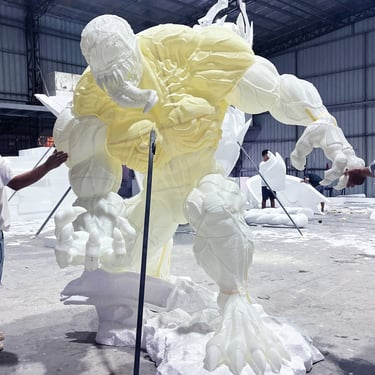
Fiberglass / FRP Sculpture
Fiberglass reinforced plastic — often called FRP or simply fiberglass — is one of the most versatile materials for custom sculpture manufacturing.
It is particularly useful for:
complex organic shapes;
character sculptures;
large lightweight forms;
commercial installations;
themed environments; and
sculptures requiring detailed painted surfaces.
Why use fiberglass for sculpture?
Fiberglass can reproduce complex surfaces while remaining significantly lighter than many solid materials.
It is also suitable for mould-based production and can receive a wide variety of finishes.
For this reason, clients searching for a custom fiberglass sculpture manufacturer are often developing projects involving characters, branded installations or sculptural forms where visual complexity is more important than expressing the material itself.
Stainless-Steel Sculpture
Stainless steel is widely used for permanent contemporary public art.
It can provide:
mirror finishes;
brushed surfaces;
coloured finishes;
polished architectural surfaces; and
highly durable outdoor structures.
Stainless-steel sculpture fabrication requires expertise in forming, welding, grinding, polishing and structural fabrication.
Aluminium Sculpture
Aluminium provides a useful combination of low weight and corrosion resistance.
It can be particularly valuable where sculpture weight needs to be reduced, transportation is difficult, suspended installation is required or the supporting structure has load limitations.
Corten Steel Sculpture
Weathering steel develops a distinctive oxidised surface and is frequently used for architectural and landscape sculptures.
Its appearance works particularly well within natural landscapes and contemporary architecture.
Resin and Composite Materials
Resins, composites and specialist casting systems are useful when projects demand detailed surfaces, complex geometry or specialised visual effects.
Mixed-Material Sculpture
Many modern custom sculptures combine several systems.
A single artwork might contain:
steel structure + fiberglass shell + CNC-machined components + integrated lighting + specialist automotive paint.
This is why selecting a sculpture manufacturer based only on one fabrication process can be limiting.
Complex creative projects usually require a coordinated multi-material production system.
Fiberglass vs Stainless Steel: Which Is Better for a Custom Sculpture?
This is one of the most common questions clients ask.
The answer depends on the artistic intention.
Choose fiberglass when the sculpture requires:
complex organic geometry;
character forms;
lightweight construction;
detailed painted surfaces; or
efficient reproduction from moulds.
Choose stainless steel when the artwork requires:
exposed metal as part of the aesthetic;
mirror or polished finishes;
long-term architectural durability; or
a distinctly contemporary material expression.
Many large sculptures combine both: an engineered steel structure internally with a fiberglass or composite sculptural surface externally.
Material decisions should therefore be made during technical development — not after the sculpture has already been designed.


What Makes an Outdoor Sculpture Different?
Outdoor sculpture fabrication introduces additional requirements.
A sculpture located inside an exhibition may only need to perform for several months.
A permanent outdoor sculpture may need to withstand years of:
sunlight;
rain;
temperature changes;
humidity;
wind;
coastal salt;
dust; and
public interaction.
Outdoor sculptures may therefore require:
UV-resistant coating systems;
corrosion protection;
drainage;
waterproof access panels;
appropriate material thickness;
internal ventilation;
engineered anchoring systems; and
maintainable surface finishes.
For major projects, environmental conditions should be discussed before the final material specification is approved.
A sculpture designed for an indoor shopping mall should not simply be manufactured using the same specification and placed outdoors.
How Do You Transport a Large Sculpture Internationally?
Large-scale sculpture fabrication does not end when the sculpture leaves the factory.
Sometimes logistics begins influencing the design months earlier.
A ten-metre sculpture may need to fit into:
shipping containers;
airfreight cargo systems;
specialised trucks; or
restricted site access routes.
The artwork can therefore be divided into engineered modules.
These sections must be designed so they can:
be manufactured accurately;
fit within transportation limits;
be safely lifted;
reconnect correctly on site; and
conceal connection lines wherever possible.
DEFARA regularly considers modular production, export packing, logistics planning and installation sequencing when developing large-scale sculptures.
This is particularly important for international sculpture fabrication and installation, where the manufacturing team and installation team may be located in different countries.
How Are Large Sculptures Installed?
Installation can be one of the most technically demanding stages of a sculpture project.
Depending on scale and location, it may require:
cranes;
rigging;
temporary support frames;
scaffolding;
lifting calculations;
engineering supervision;
traffic management;
night installation; or
coordination with building contractors.
For a shopping mall sculpture, installation may need to happen overnight so public operations are not disrupted.
For an outdoor sculpture, lifting may depend on weather conditions and crane access.
For suspended sculptures, attachment points and building load capacity become critical engineering considerations.
A good sculpture fabrication company therefore begins thinking about installation during design development — rather than after fabrication has been completed.


How Much Does Custom Sculpture Fabrication Cost?
There is no standard price per metre for a custom sculpture.
Two five-metre sculptures can have completely different costs.
The main cost drivers include:
size;
geometry;
material;
structural requirements;
surface finish;
quantity;
prototype requirements;
engineering;
mould-making;
lighting or mechanical integration;
transportation;
installation location; and
project timeline.
For example, a simple geometric fiberglass sculpture and a highly detailed five-metre character sculpture may have similar overall dimensions but radically different production requirements.
The most useful information to provide when requesting a sculpture fabrication quote is:
concept image or render;
approximate dimensions;
installation location;
indoor or outdoor use;
preferred material if known;
required completion date;
quantity;
installation requirements; and
available 3D files or drawings.
With this information, an experienced manufacturer can assess not only cost but also potential production risks.
How Long Does Custom Sculpture Fabrication Take?
Again, there is no universal timeline.
A custom sculpture programme may include:
design development → engineering → prototype → approval → mould-making → fabrication → finishing → trial assembly → packing → shipping → installation.
Large permanent public artworks generally require more development and approval time than temporary event sculptures.
However, manufacturing capability becomes particularly important when timelines are unusually demanding.
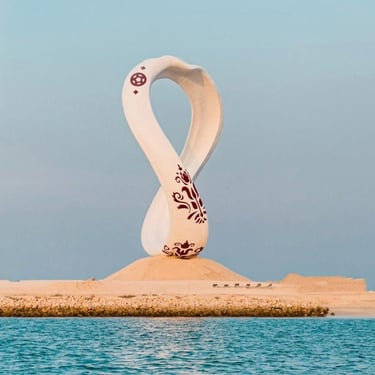
For the Qatar World Cup 2022 Giant Emblem project, DEFARA completed the monumental structure on an exceptionally accelerated programme. The finished installation measured approximately 24 × 14 × 27 metres, with 3D modelling, structural development, fabrication, logistics and installation support coordinated under an extreme deadline.
The lesson from projects of this scale is simple:
Schedule should be treated as an engineering constraint — not merely a project-management deadline.
Custom Sculpture Fabrication in Practice
The best way to understand fabrication capability is not through a list of machines.
It is through completed projects.
Qatar World Cup Giant Emblem — Monumental Sculpture Engineering
The Qatar World Cup Giant Emblem demonstrates the challenges involved when monumental public sculpture, structural engineering, international logistics and an immovable event deadline converge.
DEFARA supported 3D modelling, structural development, fabrication and on-site installation coordination for the landmark structure in Doha.
The project illustrates why monumental sculpture manufacturing requires significantly more than conventional object production.
At this scale, sculpture becomes architecture.
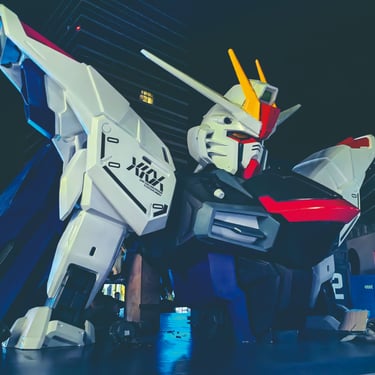
Disney 100th Anniversary — IP-Accurate Sculpture Fabrication
Character sculpture presents a different challenge.
For the Disney 100th Anniversary Exhibition, DEFARA supported fabrication of character elements and immersive environments across a touring exhibition programme.
The physical characters needed to maintain accurate proportions, expressions, colour and finishing while also being engineered for dismantling, transportation and repeated installation.
This demonstrates a very different form of fabrication expertise:
maintaining creative accuracy while engineering for real-world operation.
Hirono “Reshape” — Scaling an Artistic Language
Artist-led sculpture fabrication requires sensitivity.
The objective is not to redesign the artwork to suit a factory.
The objective is to identify manufacturing solutions capable of preserving the artist's intention.
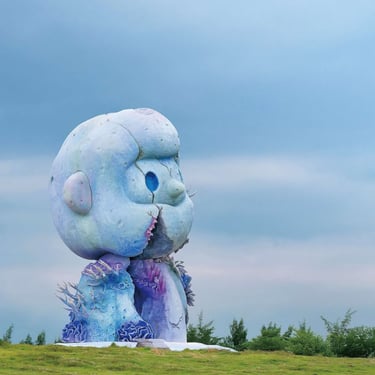
DEFARA's portfolio includes the approximately 8-metre Hirono “Reshape” landmark created for the Aranya beach environment — an example of an artistic character language being translated to architectural scale.
Scale changes everything.
A detail that works on a 20-centimetre figure may behave completely differently at eight metres.
Proportion, texture, joints, structure and visual perception all need to be reconsidered.
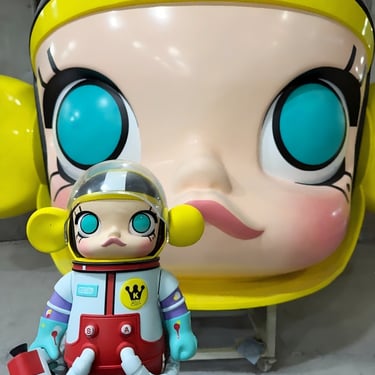
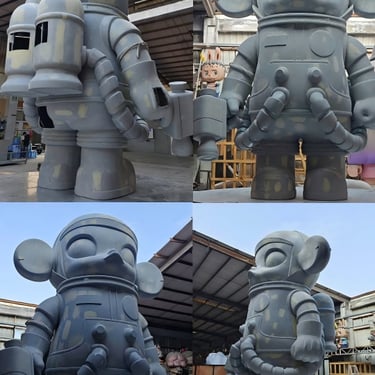
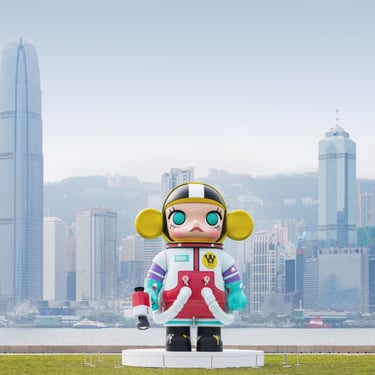
SPACE MOLLY — From Collectible Character to Public Installation
DEFARA has also produced large-scale SPACE MOLLY sculptures, including a six-metre fiberglass installation in Hong Kong.
Projects like these sit between collectible culture, public art and commercial placemaking.
They demonstrate how familiar IP can move from the scale of an object held in someone's hand to a landmark capable of defining an entire public environment.


How to Choose a Custom Sculpture Manufacturer
If you are commissioning a significant sculpture, comparing quotations alone is rarely enough.
Can they work from an early-stage concept?
Some manufacturers require complete production drawings.
Others can support technical development from sketches, renders or 3D models.
The second approach can be valuable for complex creative projects.
Do they understand both art and engineering?
A structurally successful sculpture that loses the artist's intention is not successful.
Neither is a beautiful sculpture that cannot safely be installed.
The manufacturer must understand both.
Can they work across multiple materials?
Large sculptures frequently combine metal fabrication, composites, CNC production, mould-making, finishing and engineering.
A coordinated production system reduces interfaces between separate suppliers.
Can they demonstrate relevant large-scale projects?
Ask to see projects similar in:
scale;
material;
environment;
finish;
complexity; or
installation method.
Can they handle international delivery?
If the sculpture will be installed overseas, manufacturing is only one part of the process.
Modular engineering, packing, container planning, lifting and installation sequencing should be considered from the beginning.
How do they control quality?
For high-value art and IP projects, approval stages may include:
digital model approval;
prototype approval;
material samples;
colour samples;
representative finishing samples; and
factory trial assembly.
These approval gates reduce risk before full production.
Why Custom Sculpture Fabrication Is Really About Translation
The most difficult part of custom sculpture fabrication is not making the object.
It is translating between different worlds.
The artist thinks about form, emotion and meaning.
The architect thinks about space.
The engineer thinks about forces and connections.
The manufacturer thinks about materials and processes.
The logistics team thinks about dimensions and weight.
The installation team thinks about cranes, access and assembly.
And the client ultimately sees only one thing:
the finished sculpture.
A successful fabrication partner must connect all of these disciplines without allowing the technical process to dilute the original idea.
That is where DEFARA operates.
We work at the intersection of art and engineering, transforming concepts, sketches, maquettes and digital models into buildable physical experiences.
From public artworks and monumental sculptures to commercial installations, character sculptures and artist-led projects, our role is to turn imagination into something that can be engineered, manufactured, transported and installed in the real world.



Frequently Asked Questions About Custom Sculpture Fabrication
What is custom sculpture fabrication?
Custom sculpture fabrication is the process of turning an original artwork, concept, maquette, sketch or 3D model into a physical sculpture using processes such as digital modelling, engineering, moulding, metal fabrication, fiberglass production, machining, finishing and installation.
What materials are best for large outdoor sculptures?
Common materials include stainless steel, aluminium, corten steel, fiberglass/FRP and mixed-material systems. The best option depends on the sculpture's appearance, structural requirements, climate, expected lifespan, maintenance requirements and budget.
Can a sculpture be manufactured directly from a 3D file?
Yes. 3D files can often be used as the starting point for digital enlargement, CNC machining, mould production or industrial 3D printing. However, large-scale projects normally require additional engineering and production development before manufacturing begins.
Can fiberglass sculptures be used outdoors?
Yes. Properly engineered fiberglass sculptures can be suitable for outdoor installations when appropriate resin systems, structural reinforcement, UV-resistant coatings, drainage and weather protection are incorporated.
Can large sculptures be shipped internationally?
Yes. Large sculptures can be engineered into transportable modules and shipped internationally using containers, specialist freight or, in exceptional circumstances, air cargo. Modular divisions should ideally be considered during the engineering stage.
Can DEFARA fabricate sculptures designed by independent artists?
Yes. DEFARA works with artists, designers, architects and creative studios to translate original artworks into manufacturable large-scale sculptures while preserving the artist's creative intent.
Does DEFARA provide sculpture engineering and installation support?
Yes. Depending on the project scope, DEFARA can support technical development, structural coordination, material selection, prototyping, fabrication, finishing, modular delivery planning and on-site installation coordination.
What information should I provide for a custom sculpture quotation?
Ideally provide your concept image or render, approximate dimensions, installation location, indoor or outdoor requirements, preferred materials if known, required completion date and any available drawings or 3D files.


Have a Custom Sculpture Project in Development?
Whether you are developing a public artwork, landmark sculpture, shopping mall installation, hotel centerpiece, artist collaboration, character sculpture or large-scale branded installation, early fabrication input can help identify technical challenges before they become costly problems.
Send DEFARA your concept, sketch, render, maquette or 3D file.
Our team can review the project's fabrication feasibility, materials, structural approach, production method, logistics and installation requirements — and help define a practical route from concept to completed sculpture.
Turn your idea into something people can stand beside, walk around and remember.
Adelaide
Chengdu


DEFARA © 2026
8 TEMASEK BOULEVARD
#08-05, SUNTEC TOWER THREE
038-998 SINGAPORE
Singapore


30 PIRIE STREET
ADELAIDE 5000 SA
AUSTRALIA
1210 FU NIAN PLAZA
HIGH TECH DISTRICT CHENGDU
610000 CHINA
SUITE 703, NORTH TOWER
1-5 RAILWAY STREET
CHATSWOOD 2067
AUSTRALIA
Sydney