
Fiberglass vs Stainless Steel Sculpture: Which Material Should You Choose?
PUBLIC ART FABRICATION / LARGE-SCALE SCULPTURE MANUFACTURING
9/18/20268 min read
Fiberglass vs Stainless Steel Sculpture: Which Material Should You Choose?


When planning a custom sculpture, one of the earliest and most important decisions is choosing the right material.
Should the sculpture be made from fiberglass / FRP or stainless steel?
The answer is not simply a question of which material is stronger or more durable. The right choice depends on the sculpture's form, size, location, surface finish, structural requirements, transportation, installation method, maintenance expectations and budget.
For a small indoor character sculpture, fiberglass may provide the flexibility and detailed surface required. For a monumental outdoor artwork where polished metal is part of the artistic expression, stainless steel may be the more appropriate choice.
In some projects, the best solution may even be a combination of both.
At DEFARA, material selection is considered as part of the wider fabrication process. Our production capabilities include fiberglass and composite fabrication as well as stainless steel, aluminium, corten steel and structural steel fabrication. Material recommendations are developed around the artwork's visual intent, structural requirements, durability, maintenance, transport and budget.
So, fiberglass vs stainless steel sculpture: which material should you choose?
This guide explains the key differences and when each material is most suitable for large-scale custom sculpture fabrication.
What Is Fiberglass Sculpture?
Fiberglass sculpture, often referred to as FRP sculpture, uses fiberglass-reinforced composite systems to create lightweight but highly detailed forms.
It is particularly useful when a project requires:
complex organic geometry;
character sculptures;
large lightweight forms;
detailed surfaces;
painted finishes;
mould-based production;
modular construction; or
relatively efficient transportation.
DEFARA uses FRP, resin and composite systems for detailed forms, lightweight structures and modular fabrication.
One of the major advantages of fiberglass is its ability to reproduce complex shapes while keeping the finished sculptural shell relatively lightweight.
This makes it particularly valuable for large-scale character and commercial sculptures.
What Is Stainless Steel Sculpture?
Stainless steel sculpture uses stainless steel as the visible sculptural material and, depending on the design, may also incorporate structural steel systems.
Production can involve:
cutting;
forming;
welding;
grinding;
polishing;
mirror finishing;
surface treatment; and
protective coatings.
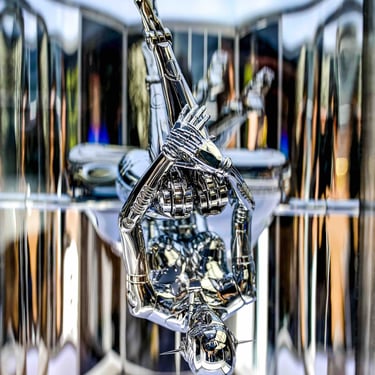
Stainless steel is especially attractive when the material itself is intended to be part of the artistic expression.
A polished stainless-steel sculpture can interact strongly with its surroundings through reflection, light and changing viewpoints.
DEFARA's metal fabrication capabilities include stainless steel, aluminium, corten steel and structural steel, together with forming, welding, polishing, mirror finishing, patination and protective coatings.
For contemporary public art and architectural sculpture, this can make stainless steel an especially powerful material.


Fiberglass vs Stainless Steel: Which Is Lighter?
For many large-scale projects, weight is one of the first practical considerations.
Fiberglass generally offers a significant weight advantage compared with a solid or heavily fabricated metal sculpture of comparable external dimensions.
This can be particularly useful when:
the sculpture is very large;
transportation distance is significant;
the installation location has load restrictions;
the artwork needs to be suspended;
crane capacity is limited; or
the sculpture needs to be assembled from multiple modules.
A lightweight sculptural shell can also make transportation and installation more manageable.
However, lightweight does not mean structurally simple.
A large fiberglass sculpture may still require an engineered internal steel framework, anchoring system or other structural reinforcement.
The visible surface may be fiberglass while the hidden structure provides the required stability.
This is one reason why material selection and structural engineering should be considered together.
Which Material Is Better for Complex Sculpture Shapes?
For highly organic or character-based forms, fiberglass often provides a strong advantage.
Consider a sculpture containing:
curved surfaces;
exaggerated proportions;
facial features;
flowing shapes;
detailed textures;
irregular geometry; or
complex three-dimensional transitions.
Fiberglass can be moulded to reproduce these forms efficiently.
This makes it particularly suitable for:
Character Sculptures
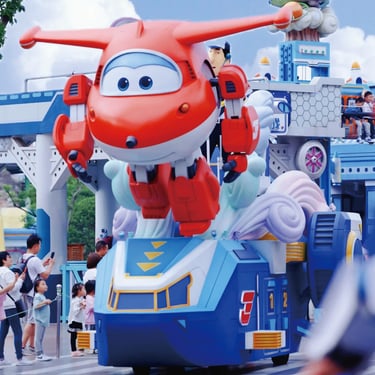
Large versions of collectible characters, animation figures, branded mascots and IP installations can benefit from mould-based fiberglass production.
Organic Sculptures
Forms inspired by nature, people, animals and abstract organic shapes can also benefit from fiberglass fabrication.
Large Commercial Installations
Fiberglass allows designers to achieve substantial visual scale without necessarily creating an equally heavy solid object.
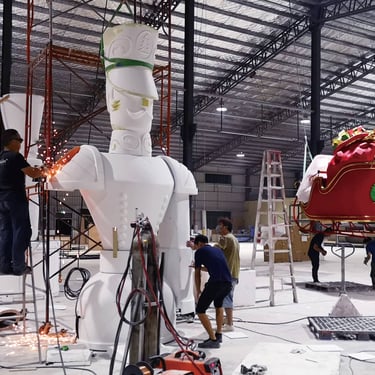
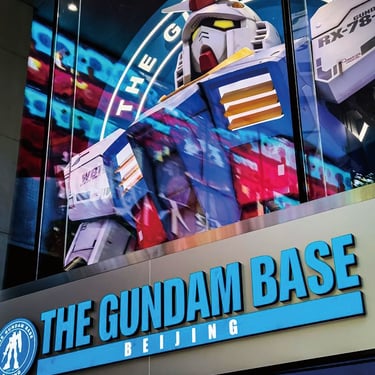
DEFARA's portfolio includes large fiberglass character and IP sculptures such as Disney exhibition characters, SPACE MOLLY and Gundam installations.
For example, DEFARA's Disney 100th Anniversary exhibition work included large fiberglass character sculptures for immersive and experiential installations.


When Is Stainless Steel the Better Choice?
Stainless steel becomes particularly attractive when the metal itself is an important part of the artwork.
It can be the preferred option when the project requires:
a contemporary architectural appearance;
visible metal surfaces;
polished or mirror finishes;
highly reflective surfaces;
long-term outdoor installation;
precise fabricated geometry; or
a sculptural language based around metal.
A stainless-steel sculpture can also create a very different relationship with its surroundings.
Rather than receiving a painted colour, the sculpture can reflect:
architecture;
sky;
landscape;
artificial lighting;
surrounding visitors; and
changing environmental conditions.
This can make stainless steel especially effective for landmark public art.
Fiberglass vs Stainless Steel for Outdoor Sculpture
Outdoor installation changes the material decision significantly.
An outdoor sculpture may need to deal with:
sunlight;
rain;
humidity;
wind;
temperature changes;
pollution;
dust;
coastal salt; and
public interaction.
Both fiberglass and stainless steel can be used outdoors, but neither should be selected without considering the specific environment.
Fiberglass Outdoors
Outdoor fiberglass sculpture can be suitable when the material system and finishing specification are selected appropriately.
Considerations may include:
resin system;
internal reinforcement;
UV protection;
surface coating;
drainage;
access panels;
structural anchoring; and
maintenance requirements.
For large permanent outdoor fiberglass sculptures, the visible shell is only one part of the system.
The internal structure and connection to the foundation are equally important.
Stainless Steel Outdoors
Stainless steel is widely used for outdoor public art because of its corrosion resistance and ability to provide durable architectural finishes.
However, “stainless steel” does not automatically mean maintenance-free.
The appropriate grade, fabrication quality, welding, surface treatment and environmental conditions all matter.
A sculpture installed in a dry inland environment may have different requirements from one installed near the ocean.
This is why outdoor material selection should be based on the actual installation environment, not simply the material name.


Which Material Is Better for Character Sculptures?
For large-scale character sculptures, fiberglass is often an efficient solution.
Characters typically require:
complex curves;
expressive facial features;
detailed surfaces;
controlled proportions;
multiple colours;
relatively lightweight construction; and
modular production.
These requirements align well with mould-based fiberglass fabrication.
DEFARA's projects include large fiberglass sculptures for Disney, Gundam, Marvel and other IP-led environments.
For example, the Disney 100th Anniversary Exhibition included giant Mickey Mouse, Buzz Lightyear and Ariel fiberglass sculptures as part of the experiential exhibition environment.
For a character that needs to be several metres tall but still visually resemble a much smaller original design, fiberglass can provide a practical combination of:
scale + detail + lightweight construction + surface flexibility.
Which Material Is Better for Monumental Public Art?
For monumental public art, the answer is less straightforward.
A large public sculpture may be made from:
fiberglass;
stainless steel;
corten steel;
aluminium;
resin;
concrete; or
a combination of materials.
The correct choice depends on the artistic intention.
For example:
Choose Fiberglass When:
the sculpture has complex organic geometry;
a lightweight structure is beneficial;
painted colour is important;
the sculpture resembles a character or figurative form;
modular transportation is required; or
detailed mould reproduction is needed.
Choose Stainless Steel When:
metal is part of the visual language;
a polished or reflective finish is required;
the sculpture is strongly architectural;
the artwork relies on light and reflection;
exposed metal surfaces are desired; or
long-term outdoor metal expression is central to the concept.
Consider a Mixed-Material Solution When:
a lightweight exterior is beneficial;
an internal steel structure is required;
different parts of the sculpture have different material requirements;
lighting or mechanical systems need to be integrated; or
the artwork combines painted and metallic surfaces.
This mixed-material approach is increasingly important in contemporary sculpture fabrication because complex creative projects rarely depend on a single manufacturing process. DEFARA specifically coordinates structural fabrication, sculptural production, moulding, machining, digital manufacturing, finishing and technical integration according to project requirements.


Fiberglass vs Stainless Steel: Transportation and Installation
Material choice also affects logistics.
A large sculpture may need to travel:
across a city;
across a country;
internationally; or
between multiple exhibition locations.
Fiberglass can provide an advantage when reducing weight is important.
Its lower weight can simplify certain transportation and lifting requirements, although large fiberglass sculptures may still require internal structural frames and modular engineering.
Stainless-steel sculptures may require more substantial lifting and transportation planning because of their weight and fabrication structure.
However, transportation is not simply about the material.
Geometry matters just as much.
A large sculpture may need to be divided into modules regardless of whether it is fiberglass or stainless steel.
DEFARA's large-scale fabrication approach includes modular production, export packing, logistics planning and installation sequencing.
This means transportation requirements should be considered at the beginning of the project rather than after the sculpture has already been fabricated.
Fiberglass vs Stainless Steel: Cost Considerations
It is difficult to say that fiberglass is always cheaper than stainless steel, or vice versa.
The final project cost depends on much more than the raw material.
Important factors include:
overall size;
geometry;
structural requirements;
level of detail;
mould requirements;
quantity;
surface finish;
engineering;
internal structure;
prototype requirements;
transportation; and
installation.
A highly detailed fiberglass sculpture may require substantial modelling, mould-making, finishing and painting.
A relatively simple stainless-steel sculpture may have a more straightforward geometry but require extensive forming, welding, grinding and polishing.
The most useful question is therefore not:
“Which material is cheaper?”
It is:
“Which material provides the most appropriate manufacturing solution for this specific artwork?”
Choosing the wrong material at the beginning can create additional engineering, production and installation costs later.
Fiberglass vs Stainless Steel: A Practical Decision Guide
If you are still deciding between the two, the following framework can help.
Choose Fiberglass / FRP if your project is:
Complex and organic
You need detailed curves, character features or irregular geometry.
Large but lightweight
The sculpture needs to achieve significant visual scale without unnecessary weight.
Highly coloured
The surface depends on custom colours, gradients, graphics or detailed painted finishes.
Character-based
The sculpture represents an IP, mascot, collectible character or figurative design.
Mould-based
You need to reproduce the same or related sculptural forms efficiently.
Modular
The sculpture needs to be divided into relatively lightweight transportable sections.
Choose Stainless Steel if your project is:
Architectural
The sculpture needs to interact strongly with contemporary architecture.
Reflective
Mirror or polished surfaces are part of the artistic concept.
Material-driven
The visual identity depends on exposed metal rather than paint.
Contemporary public art
The artwork relies on precision metal fabrication and surface reflection.
Long-term outdoor
The material and finish are intended to become part of a permanent outdoor environment.
Consider a Mixed-Material Solution if:
The artwork needs both structure and sculptural flexibility.
For example:
internal steel structure + fiberglass exterior + integrated lighting + specialist finish
can provide a balance between structural performance, weight, geometry and appearance.
This type of solution is particularly useful for large-scale creative projects where no single material can efficiently meet every requirement.


Frequently Asked Questions About Fiberglass vs Stainless Steel Sculpture
Is fiberglass better than stainless steel for large sculptures?
Not necessarily. Fiberglass is often advantageous for complex, lightweight and highly detailed forms, while stainless steel is particularly suitable when exposed metal, reflection or polished finishes are important. The best choice depends on the project.
Is fiberglass suitable for outdoor sculpture?
Yes. Fiberglass can be used for outdoor sculpture when the appropriate resin, reinforcement, protective coating, structural system, drainage and environmental specifications are selected.
Is stainless steel good for outdoor public art?
Yes. Stainless steel is widely used for outdoor public art because of its corrosion resistance and ability to achieve durable architectural finishes. The appropriate grade, fabrication and surface treatment still need to be selected according to the environment.
Which is lighter: fiberglass or stainless steel?
Fiberglass is generally much lighter than stainless steel for comparable sculptural forms. This can be advantageous for transportation, lifting and installation, although large fiberglass sculptures may still require internal structural reinforcement.
Which material is better for character sculptures?
Fiberglass is often highly suitable for large character sculptures because it can reproduce complex organic forms, detailed surfaces and painted finishes while keeping the sculpture relatively lightweight.
Can fiberglass and stainless steel be used together?
Yes. Large sculptures can combine an internal steel structure with fiberglass or composite exterior elements. Mixed-material fabrication can provide a practical balance between structural performance, weight, geometry and appearance.
Which material is cheaper for a custom sculpture?
There is no universal answer. Overall cost depends on size, geometry, engineering, mould-making, fabrication, finishing, transportation and installation as well as the material itself.
How do I choose the right material for my sculpture?
Start with the artwork's visual intent, size, location, geometry, surface finish, durability requirements, transportation conditions and budget. An experienced fabrication partner can then recommend a suitable material and structural approach.


Have a Sculpture Concept in Development?
Choosing the right material at the beginning can make a significant difference to the success of a large-scale sculpture project.
Whether you are developing a fiberglass character sculpture, stainless-steel public artwork, monumental landmark, commercial installation or mixed-material sculpture, DEFARA can help assess the fabrication requirements and recommend a practical production approach.
Share your:
concept sketch;
render;
maquette;
3D model;
approximate dimensions; or
project brief.
Our team can review the artwork and help determine the appropriate material, structural approach, fabrication method, finishing system, transportation strategy and installation requirements.
The right material does more than make a sculpture possible. It helps the original idea reach its full physical potential.


Adelaide
Chengdu


DEFARA © 2026
8 TEMASEK BOULEVARD
#08-05, SUNTEC TOWER THREE
038-998 SINGAPORE
Singapore


30 PIRIE STREET
ADELAIDE 5000 SA
AUSTRALIA
1210 FU NIAN PLAZA
HIGH TECH DISTRICT CHENGDU
610000 CHINA
SUITE 703, NORTH TOWER
1-5 RAILWAY STREET
CHATSWOOD 2067
AUSTRALIA
Sydney