
How Much Does Custom Sculpture Fabrication Cost?
PUBLIC ART FABRICATION / LARGE-SCALE SCULPTURE MANUFACTURINGTHEMED PARKS / LANDSCAPE ART
9/25/202610 min read
How Much Does Custom Sculpture Fabrication Cost?


One of the first questions clients ask when planning a custom sculpture is simple:
How much does a custom sculpture cost?
The answer, however, is rarely a single price.
A custom sculpture is not a standard product manufactured from a fixed specification. Its cost can depend on the artwork’s size, shape, material, structural requirements, surface finish, production method, transportation, installation environment and project schedule.
A small indoor character sculpture and a 20-metre outdoor landmark may both be described as “custom sculptures,” but the engineering, manufacturing and installation requirements can be completely different.
For artists, brands, developers, shopping malls and cultural institutions, understanding these cost factors early can make the budgeting and procurement process much easier.
This guide explains the major elements that influence custom sculpture fabrication cost, what is normally included in a professional quotation, and how to control the budget without compromising the artistic result.
Why Is There No Standard Price for a Custom Sculpture?
Unlike a catalogue product, a custom sculpture is developed around a specific creative concept and project environment.
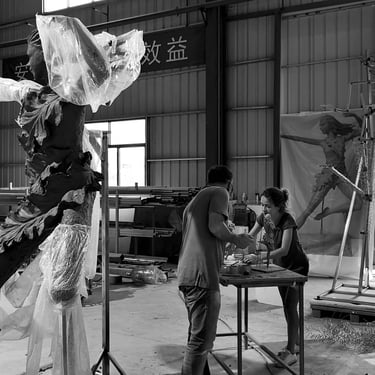
The manufacturer may need to interpret a sketch, maquette, rendering or 3D model, develop the production method, determine the structural system, select appropriate materials, create prototypes, fabricate the sculpture, finish the surface and prepare it for transportation and installation.
As a result, two sculptures with similar dimensions can have very different production costs.
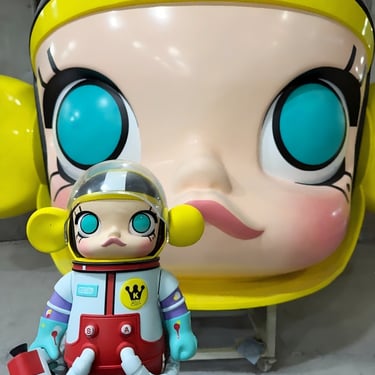
For example, a simple geometric sculpture may require relatively straightforward fabrication, while a character sculpture with complex curves, detailed facial features, multiple colours and interactive components may require significantly more moulding, finishing and assembly work.
Location also matters.
An indoor sculpture designed for a temporary exhibition has different requirements from a permanent outdoor landmark exposed to wind, rain, UV radiation and temperature changes.
This is why a professional sculpture quotation should be based on the complete project scope, rather than size alone.



What Factors Affect Custom Sculpture Fabrication Cost?
Several major factors typically influence the total cost of a custom sculpture project.
1. Sculpture Size and Scale
Size is one of the most obvious cost factors, but it is not the only one.
As a sculpture becomes larger, production often becomes more complex. Large-scale sculptures may require internal structural systems, modular construction, additional reinforcement, larger moulds, more fabrication space and specialised lifting or assembly equipment.
A large sculpture also needs to be considered as a transportation object.
A piece that cannot be shipped as one unit may need to be divided into transportable modules and reassembled on site.
This means that increasing the physical size can affect not only the amount of material required, but also engineering, fabrication, packaging, logistics and installation.
For landmark projects, scale should therefore be considered together with structure and modularisation, rather than as a simple square-metre or cubic-metre calculation.
2. Sculpture Shape and Design Complexity
The complexity of the artwork has a major influence on fabrication cost.
Simple geometric forms can often be produced using relatively straightforward cutting, forming, moulding or assembly techniques.
More complex sculptures may involve:
Organic curves and irregular surfaces
Fine sculptural details
Multiple components
Undercuts and difficult mould geometries
Complex internal structures
Moving or interactive elements
Multiple materials
Special surface treatments
Character sculptures are a good example.
A large character may look visually simple, but maintaining accurate proportions, facial expression, surface transitions and details at a much larger scale can require considerable technical development.
The more complex the form, the more important it becomes to evaluate the artwork before production begins.
3. Material Selection
Material can significantly affect both fabrication cost and the overall production strategy.
Different materials require different manufacturing processes, equipment, labour and finishing methods.
Fiberglass / FRP
Fiberglass and FRP are widely used for large-scale character sculptures, public art, exhibition installations and commercial displays.
They can provide a relatively lightweight solution for large forms and work particularly well with mould-based fabrication and painted finishes.
Fiberglass can be especially effective when the project requires:
Large lightweight forms
Complex organic shapes
Character sculptures
Repeated forms
Painted or coated surfaces
Modular transportation
However, the final cost still depends on the complexity of the mould, internal structure, surface finish and installation requirements.
Stainless Steel
Stainless steel is often selected when the sculpture requires a visible metallic appearance, structural metal fabrication or polished and mirror finishes.
Its production may involve cutting, forming, welding, grinding, polishing and other specialist processes.
Stainless steel can be particularly suitable for:
Architectural sculpture
Contemporary public art
Outdoor landmarks
Polished or mirror-finish sculptures
Sculptures where the metal itself is part of the visual expression
The material cost is therefore only one part of the calculation. Fabrication complexity and finishing requirements can have a significant effect on the final quotation.
Mixed Materials
Some projects combine fiberglass, stainless steel, structural steel, resin, acrylic, wood, lighting components or other materials.
A mixed-material sculpture can provide greater creative flexibility, but it may also require more coordination between different fabrication processes.
For this reason, material selection should ideally happen during the early technical development stage rather than after the design is already finalised.


4. Structural Engineering
For large-scale sculpture, engineering is often one of the most important cost considerations.
A sculpture may need to support its own weight, withstand transportation, resist environmental loads and connect safely to an existing foundation or architectural structure.
Depending on the project, engineering may include:
Internal steel structures
Structural calculations
Connection details
Base and anchoring systems
Wind-load considerations
Load distribution
Modular connection systems
Access and maintenance requirements
Coordination with architectural or structural engineers
For an indoor display, structural requirements may be relatively straightforward.
For a large outdoor landmark, the engineering requirements can be much more substantial.
This is why two sculptures made from the same material can have very different fabrication costs.
The structure behind the artwork can be just as important as the visible sculpture itself.
5. 3D Modelling, Technical Development and Prototyping
Not every project arrives at the factory with a production-ready 3D model.
An artist or client may provide a sketch, concept image, maquette, rendering or other creative reference.
The fabrication team may then need to develop the concept into a production-ready digital model.
This can involve:
3D sculpting
Digital enlargement
Surface refinement
Model optimisation
Structural coordination
Modular division
Production drawings
Prototype development
Material and finish testing
For highly detailed or artist-led projects, a physical prototype or sample may also be required before full production.
These development stages add cost, but they can reduce much larger risks later in the project.
Early technical development helps identify issues with proportions, structure, material selection, assembly and installation before the final sculpture is manufactured.
6. Mould Making and Tooling
Moulding is an important part of many fiberglass and composite sculpture projects.
The cost of moulding depends on the size, geometry, surface detail and number of pieces required.
A one-off sculpture and a project requiring multiple identical sculptures may also have different cost structures.
For example, investing in a high-quality mould can make sense when several sculptures need to be produced from the same master.
For a single highly customised sculpture, the fabrication strategy may be different.
The manufacturer therefore needs to understand not only what the sculpture looks like, but also how many units are required and how they will be produced.
7. Surface Finishing
The final surface can have a surprisingly significant effect on fabrication cost.
A simple painted finish is very different from a multi-layer metallic finish, mirror polish, electroplating, hand-painted surface or highly detailed scenic treatment.
Common finishing requirements may include:
Automotive-grade painting
Metallic effects
Hand painting
Textured coatings
Polishing
Mirror finishing
Patination
Electroplating
Flocking
Weather-resistant coatings
For character sculptures, colour accuracy and surface quality may be particularly important.
For public art, the surface may also need additional protection against weather and environmental exposure.
The more specialised the finish, the more time, craftsmanship and quality control may be required.


8. Transportation and Packaging
The cost of fabrication does not necessarily end when the sculpture leaves the factory.
Large sculptures often need to be divided into transportable sections.
This can affect:
Modular design
Internal structure
Connection systems
Protective packaging
Loading and unloading
Container planning
International freight
Customs requirements
Local transportation
A sculpture designed for international delivery may therefore require transportation planning from the beginning of the project.
This is particularly important for very large sculptures, where transportation dimensions can influence the entire fabrication strategy.
9. On-Site Installation
Installation is another major component of the overall project cost.
A sculpture may need to be assembled from multiple modules, positioned accurately, connected to a foundation, aligned with surrounding architecture and inspected before handover.
Depending on the project, installation may require:
Local installation teams
Rigging equipment
Cranes or lifting equipment
Scaffolding or access systems
Structural connections
Electrical or mechanical connections
Final surface repairs
Safety inspections
A sculpture intended for a shopping mall atrium may have very different installation requirements from an outdoor landmark in a public plaza.
For this reason, clients should clarify whether a quotation covers fabrication only, delivery, installation or the complete project scope.
10. Project Location
Location can influence the total project cost in several ways.
A sculpture manufactured in one country and installed in another may require international freight, export packaging, customs coordination and local installation.
The installation environment can also affect the production strategy.
For example:
Indoor installation may focus primarily on appearance, visitor safety, access and structural stability.
Outdoor installation may require additional consideration of wind, rain, UV exposure, drainage, corrosion protection and long-term maintenance.
Difficult-access locations may require special lifting plans, modularisation or installation during restricted working hours.
The location should therefore be discussed during the quotation stage rather than treated as a final logistics detail.
11. Project Schedule
Time can also affect fabrication cost.
A standard production schedule allows engineering, prototyping, fabrication, finishing, quality control and logistics to proceed in a planned sequence.
An accelerated project may require additional production shifts, parallel workflows, expedited procurement or compressed installation planning.
DEFARA's Qatar World Cup Giant Emblem project demonstrates how extreme project schedules can change the manufacturing approach. The monumental project required engineering and fabrication to be accelerated dramatically, with 3D modelling and structural development completed within an exceptionally short timeframe. DEFARA ultimately delivered the project within a 33-day programme.
This illustrates an important principle:
A shorter deadline can become an engineering and production requirement, not simply a scheduling preference.


What Is Usually Included in a Custom Sculpture Quotation?
A professional quotation should make the project scope clear.
Depending on the project, a quotation may include some or all of the following:
Creative and Technical Development
This may cover 3D modelling, technical development, production drawings, structural coordination and prototype development.
Material and Fabrication
This includes the primary materials, moulds or tooling, structural components and manufacturing labour required to produce the sculpture.
Surface Finishing
Painting, polishing, metallic finishing, texturing, weather protection and other specified treatments may be included.
Assembly and Quality Control
Large sculptures may require factory assembly, dimensional checks, surface inspection and final quality control before shipment.
Packaging and Transportation
Depending on the agreed scope, export packing, local delivery or international transportation may be included separately.
Installation
Installation can be quoted as a separate service or as part of an end-to-end project package.
Because every project is different, clients should always check what is included and excluded from a quotation before comparing prices from different manufacturers.
Why the Cheapest Quote Is Not Always the Lowest-Cost Option
When comparing sculpture manufacturers, it can be tempting to select the lowest initial quotation.
However, the lowest price may not represent the lowest overall project cost.
A quotation that excludes engineering, finishing, packaging or installation can appear cheaper while transferring those costs to later stages.
Similarly, reducing material quality or surface finishing may lower the initial manufacturing cost but create additional maintenance or replacement costs later.
For large-scale sculpture, it is often more useful to compare:
Total project scope + technical quality + delivery risk + installation requirements
rather than simply comparing the fabrication price.
A reliable manufacturer should be able to explain how the quotation was developed and which project assumptions affect the cost.



How to Control Custom Sculpture Fabrication Costs
A controlled budget does not necessarily mean choosing the cheapest materials or simplifying the artwork.
In many cases, the most effective cost savings come from making better technical decisions earlier.
Start With a Clear Creative Brief
Provide the manufacturer with as much information as possible:
Concept images
Sketches or maquettes
3D files
Approximate dimensions
Quantity
Preferred material
Finish references
Installation location
Indoor or outdoor application
Required completion date
The clearer the brief, the easier it is to evaluate the project accurately.
Choose Materials Based on the Application
Do not select a material simply because it is commonly used.
Consider the actual requirements of the sculpture.
A large lightweight character sculpture may benefit from fiberglass, while a polished architectural artwork may be better suited to stainless steel.
The correct material can reduce unnecessary structural, transportation and finishing costs.
Consider Modularisation Early
For large sculptures, modular construction can make transportation and installation significantly easier.
Instead of designing a sculpture as one enormous object and solving transportation later, the artwork can be divided into practical sections during the engineering stage.
This approach can improve:
Transportation efficiency
Packaging
Site access
Installation
Maintenance
Future relocation
Confirm the Installation Environment Early
Knowing where the sculpture will be installed can affect almost every technical decision.
The manufacturer should understand the site conditions, access restrictions, foundation requirements and environmental exposure as early as possible.
This reduces the risk of expensive modifications during installation.
What Information Do You Need to Get an Accurate Sculpture Quote?
If you are preparing a custom sculpture project, providing the following information can help a manufacturer develop a more accurate quotation:
1. Artwork or concept
Sketches, renders, photographs, maquettes or 3D models.
2. Dimensions
Approximate height, width and depth.
3. Quantity
Whether the project requires one sculpture or multiple pieces.
4. Material preference
Fiberglass, stainless steel, aluminium, resin, mixed materials or an open material specification.
5. Surface finish
Paint, metallic finish, mirror polish, texture, electroplating or other requirements.
6. Installation environment
Indoor, outdoor, temporary, permanent, public or private.
7. Location
City and country of installation, particularly for international projects.
8. Required completion date
This helps determine whether a standard or accelerated production programme is appropriate.
9. Delivery and installation scope
Whether you need fabrication only or a complete solution including packing, shipping and installation.
The more complete this information is, the easier it becomes to develop a realistic project budget.


Frequently Asked Questions
How much does a custom sculpture cost?
There is no universal price for a custom sculpture. Cost depends on factors including size, design complexity, material, structure, moulding, finishing, transportation, installation and project schedule.
Is fiberglass sculpture cheaper than stainless steel?
Not necessarily in every project. Fiberglass and stainless steel have different fabrication processes and performance characteristics. The final cost depends on the sculpture design, required finish, structural system and installation requirements.
Does a larger sculpture always cost more?
Generally, larger sculptures require more materials, engineering, fabrication and logistics. However, shape, material and production method can also have a major influence on the final cost.
Does the quotation include installation?
It depends on the project scope. Some manufacturers quote fabrication separately from transportation and installation, while others can provide an integrated project package. Always confirm the scope before comparing quotations.
Can I provide a 3D model for a quotation?
Yes. A 3D model can provide valuable information about the sculpture's form and dimensions. Additional information such as material, finish, location, quantity and installation requirements is also useful for developing an accurate quotation.
How can I reduce the cost of a large-scale sculpture?
The most effective approach is usually to optimise the project early through material selection, structural planning, modularisation, production methods and transportation planning. Reducing unnecessary complexity before fabrication begins can help control the overall budget.



Conclusion: Sculpture Cost Starts With the Right Decisions
The cost of custom sculpture fabrication is determined by much more than the price of the raw material.
Size, shape, material, engineering, moulding, finishing, transportation, installation and schedule all contribute to the final project cost.
For this reason, the best time to control the budget is not at the end of manufacturing. It is during the early stages of concept development and technical planning.
A well-planned sculpture project can balance artistic ambition with practical considerations such as structural performance, material efficiency, transportation and installation.
Whether you are developing a character sculpture, public artwork, commercial landmark or large-scale installation, the right fabrication partner can help identify the most appropriate production strategy before manufacturing begins.
Have a custom sculpture project in development?
Send DEFARA your concept, drawing, maquette or 3D model. The team can help evaluate fabrication feasibility, material options, structural requirements, production methods, finishing, transportation and installation requirements.
From the first concept to the finished landmark, the right fabrication strategy can turn a creative vision into a buildable and achievable project.
Adelaide
Chengdu


DEFARA © 2026
8 TEMASEK BOULEVARD
#08-05, SUNTEC TOWER THREE
038-998 SINGAPORE
Singapore


30 PIRIE STREET
ADELAIDE 5000 SA
AUSTRALIA
1210 FU NIAN PLAZA
HIGH TECH DISTRICT CHENGDU
610000 CHINA
SUITE 703, NORTH TOWER
1-5 RAILWAY STREET
CHATSWOOD 2067
AUSTRALIA
Sydney