
Custom Sculpture Fabrication for Artists: From Maquette to Monument
ART TOY MANUFACTURING / ARTIST COLLABORATION PRODUCTIONPUBLIC ART FABRICATION / LARGE-SCALE SCULPTURE MANUFACTURING
10/16/20269 min read
Custom Sculpture Fabrication for Artists: From Maquette to Monument


For many artists, a large-scale sculpture begins with something surprisingly small: a sketch, a clay model, a maquette or a digital 3D file.
The challenge is transforming that original idea into a physical work that may be several metres tall, installed in a public space and expected to maintain the artist's proportions, surface language and creative intent.
This is not simply a matter of making the artwork bigger.
As scale increases, new questions emerge.
How should the sculpture be structured?
Which material is appropriate?
How can the original surface quality be preserved?
How should the sculpture be divided for transportation?
How will it be installed on site?
And how can an artist remain creatively involved while a specialist fabrication team handles engineering and production?
For artists creating monumental public art, gallery installations, commercial artworks or large-scale collectible sculptures, these questions make the choice of fabrication partner an important part of the creative process.
A specialist custom sculpture fabrication company for artists should do more than manufacture the final object. It should help translate artistic intent into a buildable, durable and installation-ready sculpture while protecting the qualities that make the original artwork distinctive.
What Can an Artist Provide to a Sculpture Fabricator?
Artists do not always need to provide a production-ready engineering package.
A project may begin with very different types of creative material, including:
Hand sketches
Concept drawings
Clay maquettes
Physical models
Digital sculptures
3D files
Renderings
Photographs
Existing artworks
Material samples
Written creative briefs
A professional fabrication team should be able to evaluate the available information and identify what additional development is required.
DEFARA's public art fabrication service specifically supports projects originating from sketches, maquettes, renders and 3D files, helping develop them into buildable structures while considering material, structure, production method, modularisation and installation requirements.
This is particularly valuable for artists who want to focus on the creative direction without having to manage every manufacturing detail themselves.


Step 1: Understanding the Artist's Original Intent
Before discussing materials or engineering, the fabrication team needs to understand what makes the artwork distinctive.
This may include:
Overall proportions
Gesture and posture
Silhouette
Surface character
Texture
Facial expression
Negative space
Visual rhythm
Material appearance
Colour
Intended viewing distance
For some artworks, a small change in proportion can alter the entire character of the piece.
For others, the surface itself is fundamental to the artistic expression.
The manufacturer therefore needs to establish which aspects of the artwork are non-negotiable artistic characteristics and which can be adapted for fabrication.
This conversation should happen before production begins.
Step 2: Digital Development and Scale Planning
Once the creative direction is understood, the artwork can be translated into a production-ready digital environment.
If the artist provides a physical maquette, it may need to be digitised.
If a 3D model already exists, it may need to be cleaned, optimised or adapted for large-scale production.
The digital development stage can include:
3D scanning
Digital sculpting
Model optimisation
Scale enlargement
Surface refinement
Part separation
Modular planning
Production preparation
The goal is not simply to enlarge the model.
At monumental scale, the digital model needs to account for how the sculpture will actually be fabricated, assembled and installed.
Step 3: Choosing the Right Material
Material selection is one of the most important technical decisions in artist-led sculpture fabrication.
The appropriate material depends on the artistic language as well as the physical requirements of the final installation.
Fiberglass and Composite Materials
Fiberglass / FRP can be particularly effective for large-scale sculptures with complex organic forms.
It can provide:
Lightweight construction
Detailed sculptural surfaces
Complex curved forms
Painted finishes
Efficient mould-based production
Modular transportation
This makes fiberglass suitable for many character sculptures, public artworks and large-scale artist-led installations.
Stainless Steel and Other Metals
Metal fabrication may be more appropriate when the artwork depends on the physical expression of the material itself.
Stainless steel, aluminium, corten steel and structural steel can be used for different visual and structural purposes.
Depending on the design, metal fabrication can include:
Cutting
Forming
Welding
Grinding
Polishing
Mirror finishing
Patination
Protective coating
Mixed-Material Sculptures
Artists are not necessarily limited to one material.
A large artwork may combine structural steel with fiberglass, resin, stainless steel, wood, acrylic, lighting or other components.
The fabrication strategy should therefore be developed around the artwork rather than forcing the artwork into a predetermined production method.


Step 4: Engineering the Sculpture Without Losing the Artwork
Engineering is often where an artist's small-scale concept encounters the realities of monumental fabrication.
A large sculpture may need to withstand:
Its own weight
Wind loads
Transportation forces
Lifting forces
Environmental exposure
Visitor interaction
Long-term structural loads
The internal structure may be almost invisible in the finished artwork, but it can determine whether the sculpture can safely exist at its intended scale.
Depending on the project, engineering may involve:
Internal steel frames
Reinforcement systems
Load-bearing structures
Connection points
Anchoring systems
Lifting points
Modular joints
Foundation interfaces
The key is to integrate engineering behind the artwork rather than against it.
The structure should support the creative concept without unnecessarily changing the visible form.
Step 5: Prototyping Before Full Production
A prototype can be one of the most useful stages in an artist-led fabrication project.
It gives the artist an opportunity to evaluate the physical translation before committing to full-scale production.
Depending on the project, prototypes or samples may be used to review:
Form
Proportion
Surface detail
Material
Colour
Texture
Finish
Structural appearance
Assembly details
For complex artworks, a physical sample of a representative section can sometimes provide more useful information than digital images alone.
DEFARA's artist-focused fabrication approach includes prototypes, material samples and colour testing so that artists can review important aspects of the final work before full production.
Step 6: Establishing an Artist Approval Process
Large-scale fabrication can involve many technical decisions.
Without a clear approval system, an artist may find it difficult to maintain control over the final result.
A structured approval process can divide the project into manageable checkpoints.
For example:
Form Approval
Confirm that the enlarged sculpture maintains the intended proportions and silhouette.
Material Approval
Confirm the proposed material and construction approach.
Surface Approval
Review texture, sculptural detail and surface treatment.
Colour Approval
Confirm colour samples against the original artwork or approved reference.
Finish Approval
Review the final surface treatment before full production.
Factory Inspection
Review the completed sculpture or representative sections before shipment.
This process allows the artist to remain creatively involved while the manufacturer manages the technical execution.


Step 7: Fabricating the Monument
Once the design, engineering and approval stages are complete, full-scale fabrication can begin.
The actual production method depends on the artwork.
A project may involve:
CNC machining
Industrial 3D printing
Master pattern production
Mould making
Fiberglass lay-up
Resin production
Metal forming
Welding
Sculptural assembly
Surface preparation
Painting
Polishing
Specialist finishing
Large sculptures are often produced in multiple sections rather than as one single piece.
This allows the fabrication team to manage production, transportation and installation more effectively.
For the artist, however, the modular construction should not compromise the continuity of the artwork.
The final assembled sculpture should read as one coherent piece.
Step 8: Surface Finishing and Artistic Detail
For many artists, the surface is as important as the structure.
A technically perfect sculpture can still fail artistically if the final finish does not reproduce the intended surface quality.
Finishing may include:
Hand painting
Automotive-grade painting
Metallic finishes
Textured coatings
Polishing
Patination
Electroplating
Protective coatings
Weather-resistant treatments
For artist-led projects, colour matching can be particularly important.
A colour that appears correct on a digital screen may behave differently on a large physical surface under natural or artificial lighting.
This is why physical colour samples and finish tests can be valuable before full production.
Step 9: Modularisation for Transportation
A monument-sized artwork rarely travels from factory to destination as one complete object.
Large sculptures may need to be divided into carefully engineered modules.
The modularisation strategy should consider:
Maximum transport dimensions
Container requirements
Lifting capacity
Site access
Assembly sequence
Connection points
Structural performance
Final surface alignment
Ideally, these decisions are made during engineering rather than after fabrication.
DEFARA's large-scale sculpture services include modular delivery planning, export packing, logistics coordination and installation sequencing for international projects.
This is particularly important for artists whose work may be exhibited internationally or moved between multiple destinations.
Step 10: Installation and the Final Transformation
The installation site is where the maquette finally becomes a monument.
Depending on the project, installation may involve:
Lifting equipment
Cranes
Rigging
Scaffolding
Temporary supports
Modular assembly
Structural connections
Final alignment
Surface touch-ups
Safety inspection
For public artworks, the surrounding architecture and landscape also become part of the final visual experience.
A sculpture that looks balanced in the factory may need subtle adjustments when viewed in its actual environment.
This is why installation should be considered part of the artwork's fabrication process rather than an entirely separate service.


Examples of Artist-Led and Creative Sculpture Fabrication
DEFARA's portfolio spans artist-led projects, public art, IP-based artworks and large-scale installations.
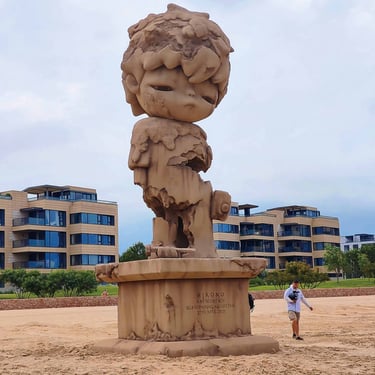
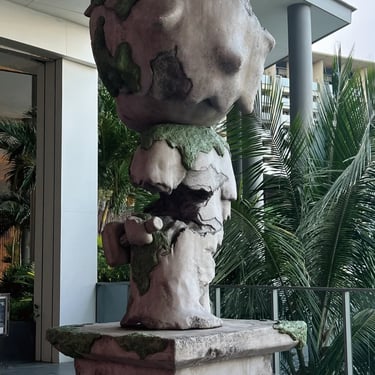
Its current public art portfolio includes large-scale works such as the 8m Hirono “Reshape” installation at Aranya, as well as the Zeng Zhenwei “Tube Series” public art installation. Its public-art fabrication service also highlights large-scale fiberglass and composite sculptures, metal artworks and artist-led projects as core capabilities.
The broader artist collaboration programme extends from collectible-scale works to art-grade sculptures. DEFARA's artist collaboration work has included artists such as Yoshitomo Nara, Taku Obata, Mayuka Yamamoto and Moe Nakamura, as well as creators behind characters including MOLLY, LABUBU and HIRONO.
This range illustrates an important point:
Artist-led fabrication does not have one fixed scale.
The same principles of preserving proportion, surface character, material expression and creative intent can apply to a limited-edition sculpture, an exhibition installation or a monumental public artwork.
From Artist's Maquette to Public Landmark: What Changes Along the Way?
The journey from maquette to monument can be understood as a series of translations.
Artistic Translation
The original concept is interpreted in three dimensions while preserving its visual identity.
Digital Translation
The artwork is developed into a scalable and production-ready digital model.
Engineering Translation
The form is supported by a structure capable of meeting the physical requirements of the final environment.
Manufacturing Translation
The digital and engineering information is converted into physical components using appropriate materials and processes.
Installation Translation
The components are transported, assembled and positioned within the final architectural or public environment.
At every stage, the goal is the same:
The final monument should remain recognisably the artist's work.


How Much Does Artist-Led Sculpture Fabrication Cost?
There is no standard price for transforming a maquette into a monumental sculpture.
Cost can depend on:
Original artwork and development requirements
Final dimensions
Material
Structural system
Surface complexity
Prototype requirements
Quantity
Modularisation
Transportation
Installation
Outdoor durability requirements
Project schedule
A one-off public artwork may have very different requirements from a limited-edition sculpture or a touring exhibition piece.
For artists, it is therefore useful to discuss the project with the fabricator at an early stage.
A manufacturer can often identify opportunities to optimise materials, modular construction and production methods before the design is locked into a more expensive fabrication strategy.
How Artists Can Prepare for a Fabrication Project
Artists do not need to have every technical answer before contacting a manufacturer.
However, the following information can help establish a productive starting point:
Artwork or concept
Provide sketches, maquettes, renders, photographs or 3D files.
Target size
Indicate the approximate final height, width and depth.
Material preference
If you have a preferred material, explain why. If not, allow the fabrication team to recommend options.
Installation environment
Specify whether the sculpture will be indoors, outdoors, temporary or permanent.
Location
Provide the city and country, along with any available site information.
Surface and finish
Share reference images or examples of the desired colour, texture and material expression.
Quantity
Clarify whether the project requires one unique sculpture, multiple editions or several related works.
Timeline
Provide the target completion or exhibition date.
Delivery requirements
Clarify whether you require fabrication only or support with transportation and installation.
The more information available at the beginning, the easier it is to develop a practical fabrication strategy.


Frequently Asked Questions
Can an artist provide only a maquette instead of a 3D model?
Yes. A physical maquette can be used as the starting point for digital development and scale enlargement. The exact process depends on the artwork and the required final size.
Can a sculpture fabrication company help develop an artist's concept?
Yes. Fabrication companies can provide different levels of technical development. Some projects begin with an approved design, while others require support with digital modelling, material selection, structural development or production feasibility.
How do you scale a small sculpture into a large monument?
Scaling normally involves digital development, proportion review, structural planning, material selection, modularisation and production engineering. It is more than simply enlarging the dimensions because the physical requirements change significantly with scale.
How can an artist make sure the final sculpture remains faithful to the original?
A clear approval process is essential. Digital models, prototypes, material samples, colour tests and factory inspections can give the artist opportunities to review the work at important stages.
What is the best material for an artist's large-scale sculpture?
There is no universal answer. Fiberglass and composites can be effective for lightweight, complex forms, while stainless steel and other metals may be appropriate when metallic expression, structural performance or specific finishing techniques are important. Material selection should be based on the artwork and installation environment.
Can a large sculpture be produced in sections?
Yes. Large sculptures are often modularised for fabrication, transportation and installation. The connection strategy should be considered during engineering so that the assembled sculpture maintains structural integrity and visual continuity.
Can an artist remain involved throughout fabrication?
Yes. A well-structured artist-fabricator collaboration can include approvals for form, scale, material, colour, texture, finish and final production. DEFARA's artist collaboration approach specifically emphasises artist review during prototype, material and colour development.
Can large-scale sculptures be shipped internationally?
Yes. Monumental sculptures can be engineered into transportable modules and prepared for export packing and international delivery. Installation can then be coordinated with local teams or supported on site depending on the project scope.


Conclusion: Turning Artistic Vision Into Monumental Reality
For an artist, the most important part of a large-scale fabrication project is not simply achieving a larger physical size.
It is preserving the identity of the artwork while adapting it to the realities of structure, material, manufacturing, transportation and installation.
A successful journey from maquette to monument requires close collaboration between the artist and the fabrication team.
The artist provides the creative vision.
The fabrication partner brings engineering, materials, manufacturing expertise and project execution.
Together, they transform an original idea into a physical work that can exist at architectural scale.
DEFARA supports artists, architects, art consultants and cultural organisations with artist-led fabrication ranging from early concept review and technical development to prototyping, large-scale production, finishing, modular delivery and installation.
Adelaide
Chengdu


DEFARA © 2026
8 TEMASEK BOULEVARD
#08-05, SUNTEC TOWER THREE
038-998 SINGAPORE
Singapore


30 PIRIE STREET
ADELAIDE 5000 SA
AUSTRALIA
1210 FU NIAN PLAZA
HIGH TECH DISTRICT CHENGDU
610000 CHINA
SUITE 703, NORTH TOWER
1-5 RAILWAY STREET
CHATSWOOD 2067
AUSTRALIA
Sydney